B 1/7 Mahanagar Extension ( Opp. Sahara India Centre ), Kapoorthala, Lucknow - 226006

Mon - Sat: 10:00am to 8:30pm
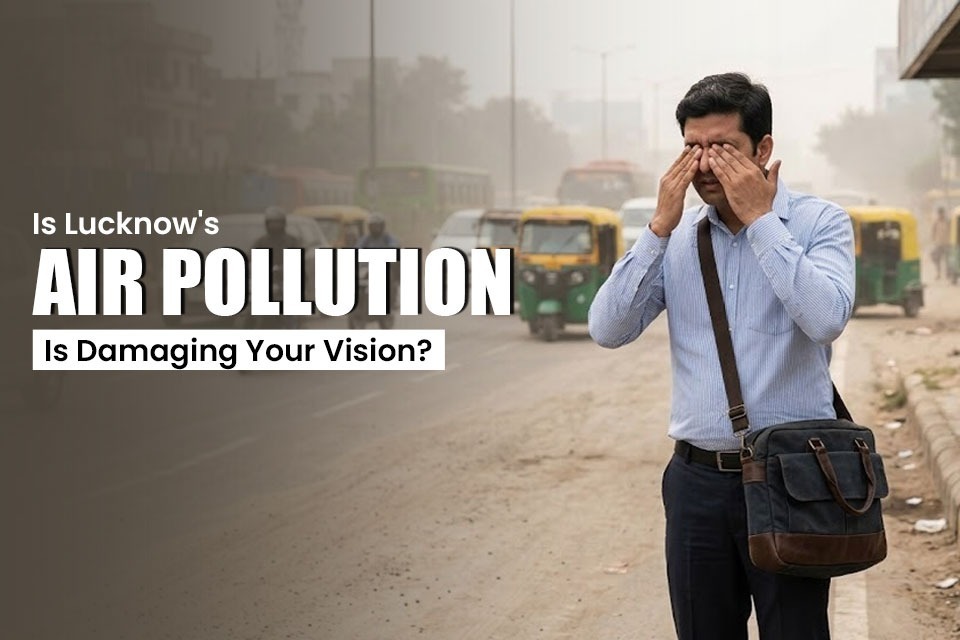
Step outside on any busy morning in Lucknow — whether you are crossing the crowded stretch near Charbagh Railway Station, riding through the construction zones near Shaheed Path, or walking through the dusty lanes of Aminabad or Alambagh — and your eyes feel it almost immediately. That sting. That gritty feeling. That urge to rub your eyes.
Most people in Lucknow blame tiredness or the weather. But the real culprit is far more serious — Lucknow's worsening dust levels and air pollution, which year after year are ranked among the highest in Uttar Pradesh and the country.
At Susanjeevani Hospital, the best eye hospital in Lucknow, our eye specialists see a significant number of patients every single week who are dealing with eye conditions directly triggered or worsened by the city's dust, particulate matter, vehicle exhaust, and construction-related pollution. Many of these patients had no idea their environment was damaging their eyes.
This blog gives you a complete, medically accurate picture of how Lucknow's air quality affects your eyes, which conditions are most common, what the warning signs are, and what you can do — both at home and with the help of an experienced eye doctor in Lucknow — to protect your vision.
Why Lucknow's Air Quality Is a Serious Threat to Eye Health
Lucknow regularly records dangerously high Air Quality Index (AQI) levels — especially during the winter months from October to February, when cold air traps pollutants close to the ground, and during the summer months when dry, dusty winds blow across the city.
The problem is compounded by rapid urban construction, heavy traffic on arterial roads like Faizabad Road, Kanpur Road, and the Ring Road, seasonal crop burning in surrounding districts, and the general dust load from unpaved roads and construction sites across areas like Gomti Nagar Extension, Sultanpur Road, and Lucknow's expanding outskirts.
The pollutants that damage eyes most severely include fine particulate matter (PM2.5 and PM10), nitrogen dioxide from vehicle exhaust, ozone, sulphur dioxide, and airborne allergens including pollen, mould spores, and dust mite particles.
These are not just irritants — they are chemical and biological agents that can cause inflammation, oxidative damage, and long-term structural harm to the delicate tissues of your eyes.
Dust particles, which are larger and visible, cause immediate mechanical irritation and abrasion to the eye surface. Fine pollutants, which are invisible, penetrate deeper and cause more insidious, chronic damage over weeks, months, and years.
The Most Common Eye Problems Caused by Dust and Air Pollution in Lucknow
1. Chronic Dry Eye Disease — The Most Widespread Pollution-Related Eye Problem in Lucknow
Dry eye disease is by far the most common eye condition linked to air pollution that we treat at our eye hospital in Lucknow. Airborne pollutants directly damage the tear film — the thin protective layer of moisture that covers the surface of your eye. When the tear film is disrupted or depleted, the eye surface becomes exposed, inflamed, and uncomfortable.
Symptoms include persistent burning or stinging in the eyes, a gritty or sandy feeling, redness, watering eyes (which is actually the eye's response to dryness), blurred vision that fluctuates through the day, and a feeling of heaviness in the eyes by evening.
Dry eye is not just uncomfortable — if left untreated, it leads to chronic inflammation of the eye surface, corneal abrasions, and in severe cases, scarring that permanently affects vision.
If you have been experiencing these symptoms for more than two to three weeks, do not ignore them. Our eye specialist in Lucknow at Susanjeevani Hospital can assess the exact type and severity of your dry eye and recommend the right treatment — from lubricating eye drops to advanced dry eye therapy. Read our detailed guide on chronic dry eye risk factors and prevention to understand this condition better before your visit.
2. Allergic Conjunctivitis — Red, Itchy, Watery Eyes That Keep Coming Back
Allergic conjunctivitis is one of the most common reasons residents of Lucknow visit an eye clinic, especially during seasonal changes in spring and autumn when pollen counts are high, and during winter when air quality deteriorates sharply.
When airborne allergens — pollen, dust mite particles, mould spores, or pollution particles — come into contact with the conjunctiva (the thin transparent membrane covering the white of the eye and the inner eyelids), they trigger an immune reaction. This causes the classic symptoms: intense itching, redness, watering, a burning sensation, and sometimes swelling of the eyelids.
Many patients in Lucknow self-medicate with antihistamine tablets or random eye drops from a pharmacy. This can temporarily suppress symptoms but does not treat the underlying allergy or protect the eye surface from ongoing damage. Proper diagnosis by an ophthalmologist in Lucknow is essential to identify the specific trigger and provide targeted treatment.
Importantly, rubbing itchy eyes — which almost everyone does instinctively — should be strictly avoided. Rubbing worsens inflammation, can introduce bacteria and dust particles deeper into the eye, and over time can contribute to a condition called keratoconus where the cornea progressively thins and bulges forward.
3. Ocular Surface Infections — Bacterial and Viral Eye Infections Triggered by Pollutants
Dust and pollution particles carry bacteria, fungi, and viruses. When these land on the eye surface — especially in eyes that are already irritated or have a compromised tear film — they can cause infections of the conjunctiva (conjunctivitis) and cornea (keratitis).
Bacterial conjunctivitis causes redness, discharge that may be sticky or crusty especially in the morning, and irritation. Viral conjunctivitis — often called "eye flu" — is highly contagious, causes intense redness and watering, and spreads rapidly in densely populated areas of Lucknow particularly during monsoon and post-monsoon months.
Corneal infections are more serious. The cornea is the transparent front surface of the eye, and any infection here — if not treated promptly and correctly by an eye doctor in Lucknow — can lead to corneal ulcers and permanent scarring that impairs vision.
4. Worsening of Glaucoma — A Silent Risk That Pollution Makes More Dangerous
Research has increasingly linked long-term exposure to air pollution — particularly fine particulate matter (PM2.5) — to an elevated risk of glaucoma and faster progression of existing glaucoma. Glaucoma is a condition where damage to the optic nerve, usually linked to raised eye pressure, causes irreversible vision loss. It has no symptoms in its early stages.
Lucknow residents who have a family history of glaucoma, are above 40 years of age, or have diabetes or high blood pressure are already at elevated risk for glaucoma. Prolonged exposure to high pollution levels adds another layer of risk that should not be dismissed.
The most dangerous aspect of glaucoma is that by the time symptoms appear — usually peripheral vision loss — significant, permanent damage has already occurred. This is why regular eye pressure measurement and optic nerve assessment at a well-equipped eye hospital in Lucknow is so critical for high-risk individuals.
5. Corneal Abrasions and Foreign Body Injuries from Dust
Lucknow's construction boom and dusty road conditions mean that foreign bodies — tiny particles of dust, grit, cement powder, and metal fragments near construction zones — frequently land in people's eyes. When a particle lands on the cornea and is rubbed in, it causes a corneal abrasion — a painful scratch on the corneal surface.
Corneal abrasions cause sudden sharp eye pain, intense sensitivity to light, watering, and a feeling that something is still in the eye even after the particle may have been flushed out. They heal quickly with proper treatment but can become infected if not managed correctly.
What most patients do wrong: they try to rub the foreign body out, apply rose water or kajal (common home remedy mistakes), or wait for it to "go away on its own." These approaches can turn a simple corneal abrasion into a serious corneal ulcer.
For any foreign body or eye injury, visit our eye care center in Lucknow immediately. Do not rub, do not apply anything, and do not use anyone else's eye drops.
6. UV Radiation Compounded by Pollution Haze
Lucknow's intense summer sun — with temperatures regularly crossing 42 to 45 degrees Celsius from April to June — delivers significant UV radiation exposure to anyone who is outdoors.
Pollution haze can create a false sense of protection from sunlight, but UV radiation penetrates through haze and can cause photokeratitis (essentially a sunburn of the cornea), accelerated cataract formation, and increased risk of pterygium (a fleshy growth on the white of the eye that can eventually cover the cornea).
7. Increased Cataract Risk from Oxidative Stress
Long-term exposure to air pollution causes oxidative stress throughout the body — including in the lens of the eye. The lens is naturally rich in antioxidants that keep it clear, but sustained exposure to pollutants depletes these antioxidants over time and accelerates the clouding of the lens — which is what a cataract is.
Research suggests that people living in high-pollution urban environments develop cataracts at an earlier age compared to those in cleaner environments. For Lucknow residents, particularly those who work outdoors, commute daily on busy roads, or live near major traffic corridors like Faizabad Road or Kanpur Road, this is a meaningful long-term risk.
Cataract surgery in Lucknow — using the phaco sutureless technique with a foldable lens implant — is highly safe and effective when performed at a well-equipped eye hospital. But the best approach is prevention and regular monitoring so that cataract formation is detected early.
High-Risk Groups in Lucknow — Who Needs Extra Eye Protection from Pollution
Not everyone is equally affected by Lucknow's air quality. Certain groups face a significantly higher risk of developing pollution-related eye problems:
- Daily commuters — especially those who ride two-wheelers through high-traffic areas like Hazratganj, Aminabad, Alambagh, and the Charbagh-Kaiserbagh stretch — have prolonged, unprotected exposure to exhaust fumes and dust.
- Construction workers and outdoor labourers — those working at the numerous construction sites across Lucknow's expanding neighbourhoods face daily exposure to cement dust, metal particles, and chemical irritants.
- Children — children's immune systems and tear film defence mechanisms are still developing, making them more vulnerable to allergic conjunctivitis and eye infections. Parents of school-going children who frequently rub their eyes or complain of itching should not delay a consultation at our eye clinic in Lucknow.
- Contact lens wearers — contact lenses trap dust and pollution particles against the eye surface and reduce oxygen supply to the cornea, significantly increasing the risk of infection and corneal damage in polluted environments.
- Elderly individuals — older adults already have age-related reductions in tear production and corneal sensitivity, making them more vulnerable to both dry eye disease and delayed healing from corneal injuries.
- Diabetic patients — diabetes compromises the immune system and the blood vessels in the eye, making diabetic patients far more susceptible to serious eye infections and slower healing after corneal injuries.
Practical Protection Tips — How to Protect Your Eyes from Pollution in Lucknow
Wear Wrap-Around Sunglasses or Protective Eyewear Outdoors
Good quality sunglasses with UV400 protection and a wrap-around frame provide a physical barrier against dust particles, allergens, and UV radiation simultaneously. This is one of the most effective and underused eye protection strategies for Lucknow residents. Look for sunglasses with polarised lenses and side coverage if you commute daily on busy roads.
Use Lubricating Eye Drops — But Choose the Right Ones
Preservative-free lubricating eye drops (artificial tears) help flush out pollutants from the eye surface and restore the tear film. They are particularly useful if used after coming indoors from a dusty environment. However, do not use the same drops for weeks without consulting an eye specialist in Lucknow — different types of dry eye require different formulations, and incorrect drops can sometimes worsen symptoms.
Avoid Rubbing Your Eyes — No Matter How Strong the Urge
This is the single most important thing to remember. Rubbing forces particles deeper into the cornea, worsens inflammation, spreads any infection that may be beginning, and over time can structurally damage the cornea. If something is in your eye, flush it gently with clean water or a sterile eye wash and visit an eye doctor in Lucknow if the irritation persists.
Flush Your Eyes After Outdoor Exposure
After spending time outdoors in polluted or dusty areas of Lucknow, splash clean water gently over your closed eyes. This helps remove surface particles before they cause irritation or enter the eye. Do not use tap water directly in the eye — wash your face and eye area with clean water, blink several times, and use lubricating drops if needed.
Keep Windows Closed During High-Pollution Hours
Air quality in Lucknow is typically worst in the early morning hours (6 to 9 AM) and evening hours (6 to 10 PM) when traffic is heaviest and atmospheric conditions trap pollutants. Keep windows closed during these periods, particularly in rooms where children sleep or spend long hours. If you use a ceiling fan, be aware that it circulates indoor dust — cleaning fan blades and air conditioning filters regularly reduces the dust load in your home.
Eat Foods That Support Eye Health and Reduce Oxidative Damage
A diet rich in antioxidants directly counters the oxidative damage that pollution causes to eye tissue. Include green leafy vegetables like spinach and methi, orange and yellow vegetables like carrots and pumpkin, citrus fruits like amla and oranges, and nuts like almonds and walnuts in your daily diet. These foods provide Vitamins A, C, and E, lutein, and zeaxanthin — all of which are scientifically proven to protect the retina and lens from oxidative damage.
When Should You Visit an Eye Hospital in Lucknow for Pollution-Related Eye Problems?
Do not wait for symptoms to become severe. Visit our eye specialist in Lucknow at Susanjeevani Hospital promptly if you experience:
- Redness that does not clear after 24 to 48 hours
- Persistent itching, burning, or gritty feeling that does not improve with simple measures
- Sticky or crusty discharge from the eyes, especially in the morning
- Sudden sharp pain in the eye after exposure to dust or a foreign object
- Sensitivity to light that was not there before
- Blurred vision that comes on suddenly or does not clear with blinking
- Swelling of the eyelids combined with eye redness
None of these symptoms should be dismissed as "just dust in the eye." Each of these can be the first sign of a condition that worsens significantly if untreated. Early treatment at the right eye hospital in Lucknow makes recovery faster, simpler, and more complete.
Why Susanjeevani Hospital Is Lucknow's Trusted Eye Hospital for Pollution-Related Eye Care
Susanjeevani Hospital, located at Kapoorthala in Lucknow, is a superspeciality eye care centre offering the complete range of diagnostic and treatment facilities needed to manage every eye condition related to dust, pollution, and environmental exposure — from simple dry eye treatment in Lucknow to complex corneal and vitreoretinal conditions.
Our in-house facilities include advanced OCT (Optical Coherence Tomography) for retinal and optic nerve assessment, Fundus Fluorescein Angiography, a fully equipped operation theatre for cataract surgery in Lucknow and vitreoretinal surgery, glaucoma treatment in Lucknow using the latest diagnostic and therapeutic tools, and a dedicated contact lens clinic for patients who need specialist guidance on safe lens use in Lucknow's polluted environment.
Dr. Mohit Khemchandani, our senior ophthalmologist and vitreoretinal specialist, brings deep expertise in managing the full spectrum of eye conditions — from routine eye infections and allergic conjunctivitis to complex retinal diseases — and is committed to giving every patient a thorough, clearly explained consultation.
OPD Timings: Monday to Saturday, 10:00 AM to 8:30 PM
Phone: +91-8400868388
Address: B 1/7 Mahanagar Extension, opposite Sahara India Centre, Kapoorthala, Lucknow — 226006